
- Private equity firms operate in an increasingly data-intensive environment, where portfolio companies generate large volumes of financial and operational data across multiple business systems.
- Reliable business data enables firms to strengthen due diligence, make more informed investment decisions, allocate capital more effectively, and identify opportunities for value creation across the portfolio.
- Business data also helps firms understand the drivers behind company performance, detect emerging risks earlier, and support long-term exit planning.
- AI enhances the value of portfolio data by connecting data across systems, surfacing meaningful insights, automating reporting, strengthening compliance oversight, and supporting more informed decision-making.
- Firms that can effectively combine connected business data with AI-powered insights are better positioned to improve portfolio oversight, create long-term value, and maximize investment outcomes.
Private equity firms have access to more business data today than at any other point in time. Every portfolio company generates financial, operational, and workforce data that can help you improve investment decisions and strengthen portfolio management.
But having more data does not automatically lead to better outcomes. The real advantage comes from transforming that data into meaningful business insights - understanding what is driving performance, where risks are emerging, and where the greatest opportunities for value creation exist.
As you become increasingly involved in shaping the long-term success of your portfolio companies, the ability to use data effectively is becoming a key competitive differentiator. Artificial intelligence is further accelerating this shift by helping your investment teams analyze complex business information faster and at greater scale.
Why data is crucial for private equity firms

Today's private equity firms operate in an environment where portfolio companies generate significantly more business data, operational value creation has become a key driver of returns, and investment teams are expected to make faster, data-backed decisions throughout the investment lifecycle. As a result, data has evolved from a reporting resource into a strategic asset.
1. Portfolio companies generate more business data than ever before
Businesses today operate through dozens of digital systems across finance, sales, operations, HR, procurement, payroll, and customer management. Every transaction, customer interaction, operational process, and financial activity generates data that provides insight into how the business is performing. For private equity firms, this creates an opportunity to understand portfolio companies in far greater depth than was previously possible.
2. Investment decisions need to be faster and better informed
Private equity firms have to make critical decisions throughout the investment lifecycle - not only during acquisitions, but also when allocating capital, supporting management teams, evaluating strategic initiatives, and planning exits. As markets become more competitive, relying solely on historical information is no longer enough.
3. Business complexity continues to increase
Portfolio companies are growing more complex. Many operate across multiple geographies and industries, while investment teams are often responsible for managing larger and more diverse portfolios. This complexity makes business data an increasingly important resource for effective portfolio oversight.
4. Competitive advantage increasingly depends on how data is used
What differentiates leading private equity firms is no longer access to information - it is the ability to convert that data into better investment decisions, stronger portfolio oversight, and more effective value creation strategies.
5. The investment lifecycle has become more data-intensive
The role of data extends far beyond due diligence. Throughout the holding period, firms need to evaluate company performance, assess operational progress, support management teams, and prepare for exits - each of which depends on accurate, timely, and reliable business information.
Treating portfolio data as a strategic asset yet?
Hobasa helps PE teams turn fragmented company data into faster diligence and oversight decisions.
Talk to our teamHow data creates a strategic advantage for private equity firms

Having access to business data is only the starting point. The real value lies in how that data helps you make better decisions throughout the investment lifecycle.
1. Make investment decisions with confidence
Every major investment decision - from capital allocation and follow-on investments to exit planning - depends on an accurate understanding of business performance. Reliable data lets teams move beyond historical outcomes to a broader view of how companies are performing today.
2. Allocate capital where it creates the greatest value
Every investment firm has finite capital, making allocation decisions critical. Reliable business data provides clarity into portfolio performance, operational progress, and business priorities, so capital moves toward the opportunities aligned with long-term value creation.
3. Identify operational improvement opportunities
Reliable data makes it easier to identify where operational improvements will have the greatest impact - whether that involves improving profitability, strengthening working capital, reducing inefficiencies, or supporting revenue growth.
4. Strengthen due diligence before making investments
Comprehensive business data allows teams to evaluate a target from multiple perspectives. Beyond financial statements, you can analyze customer and supplier concentration, cash flow, working capital trends, and operational efficiency to enter negotiations with a clearer view of both opportunity and risk.
5. Support exit strategies
Reliable data enables you to monitor value creation, measure performance improvements, and understand how the company has evolved throughout the holding period - supporting exit readiness and a stronger investment narrative.
6. Benchmark portfolio company performance
Comparing performance across a consistent set of financial and operational metrics makes it easier to identify which companies are delivering strong results, where performance is lagging, and which successful strategies can be replicated across the portfolio.
How AI helps private equity firms make the most of portfolio data

Business data is only valuable when it can be translated into timely, actionable insights. As portfolio companies generate increasing volumes of financial and operational information, manually analyzing that data becomes time-consuming and increasingly difficult. AI helps firms process this data more efficiently and surface insights that support better decisions.
1. Gain a unified view across portfolio companies
AI analytics platforms like Hobasa bring together data from finance, HR, CRM, procurement, payroll, and operations systems, giving teams a single, connected lens on each portfolio company's overall health.
2. Detect risks proactively
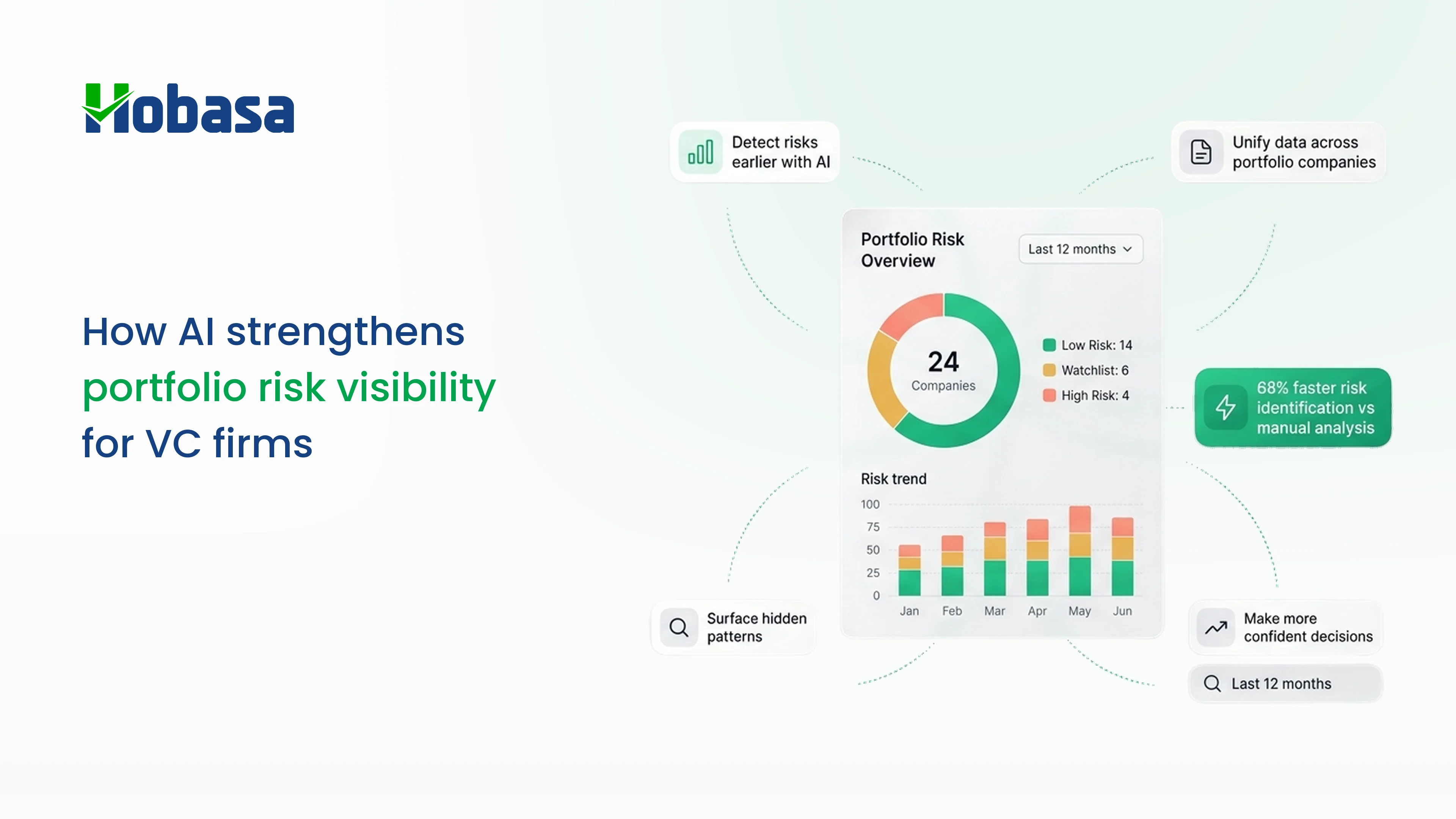
Risks rarely appear without warning. AI continuously analyzes performance indicators to flag unusual patterns - so teams can investigate early and act before issues impact returns.
3. Strengthen fraud detection
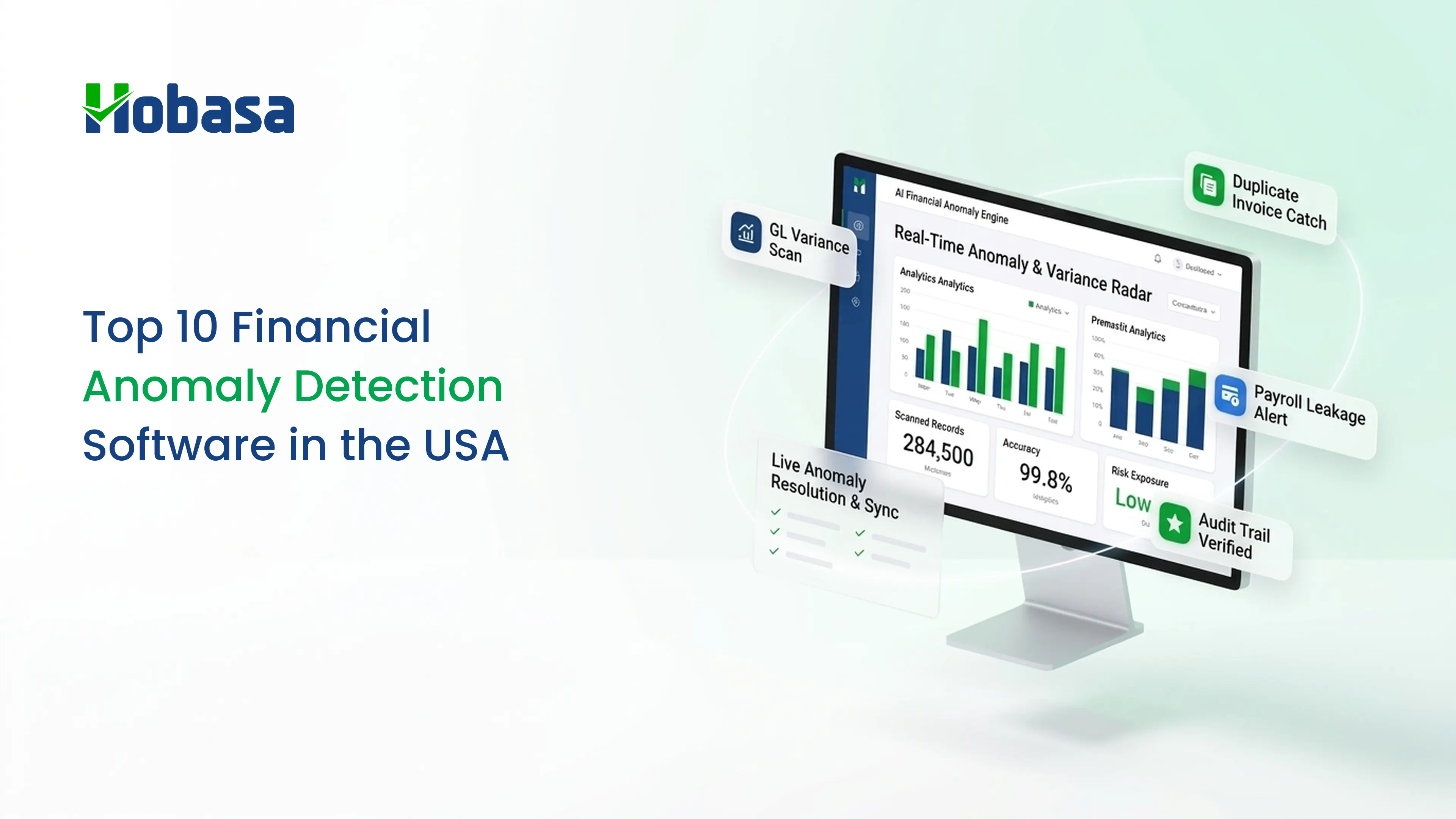
AI can identify anomalies across large volumes of transactional data - duplicate payments, unusual spending patterns, and transactions that deviate from normal behavior - adding an additional layer of oversight to internal controls.
4. Improve compliance oversight
With AI-enabled systems, teams can continuously monitor for missing documentation, policy deviations, and potential compliance gaps across jurisdictions - supporting stronger governance across the portfolio.
5. Forecast business performance more effectively
AI can analyze historical performance alongside current indicators - revenue, profitability, cash flow, customer acquisition, operating costs, workforce changes - to inform a more accurate view of likely business trajectories.
6. Automate portfolio reporting
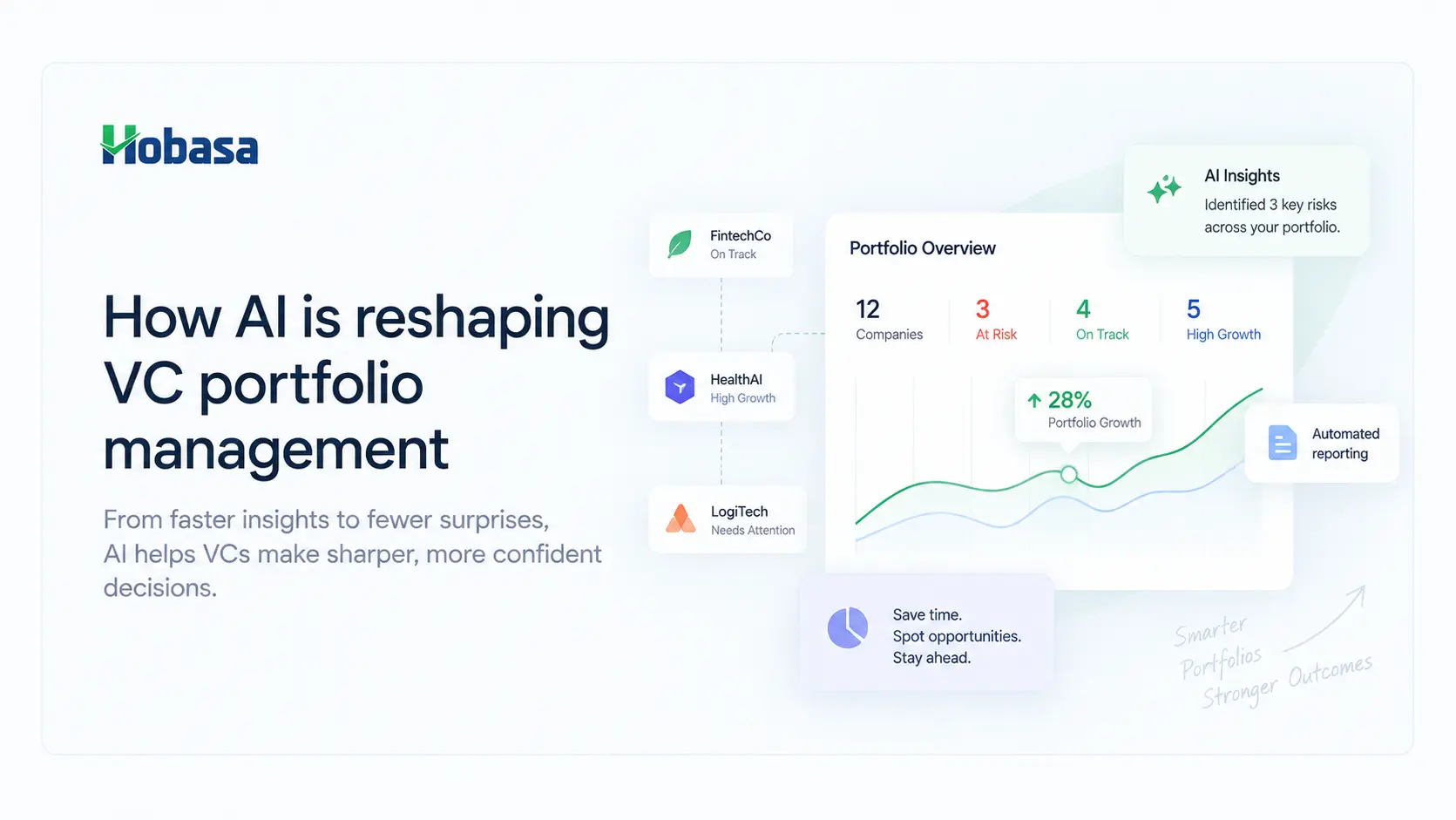
AI consolidates business information, generates standardized reports, and highlights key performance trends automatically - reducing administrative burden and freeing teams to focus on value creation.
7. Surface portfolio-wide insights
AI analyzes portfolio-wide data to uncover recurring operational challenges, common growth drivers, and performance trends that may not be visible when reviewing each company individually.
AI on portfolio data you can actually trust.
See how Hobasa strengthens PE decision-making with clearer, connected business signals.
Get in touchTurning portfolio data into competitive advantage
Private equity firms have always relied on information to make investment decisions. What has changed is the volume, variety, and importance of the data available throughout the investment lifecycle. Today, success depends on understanding what that data reveals about performance, operational progress, and emerging risks.
Firms that can transform business data into meaningful insights are better positioned to validate investment decisions, support portfolio companies more effectively, allocate capital smartly, and maximize value at exit.
This is where platforms like Hobasa can make a meaningful difference. By bringing together financial and operational data from multiple business systems into a single platform, Hobasa gives you a connected view of portfolio company performance. Combined with AI-powered analytics, it helps your teams gain deeper business insights, monitor portfolio health continuously, and make better-informed decisions across the investment lifecycle.
See how Hobasa turns portfolio data into a competitive edge.
Connect financial and operational data across your portfolio and let AI surface the insights that move investment decisions forward.
FAQs
Data has become a strategic asset because it supports decision-making throughout the entire investment lifecycle. From evaluating acquisition opportunities and conducting due diligence to portfolio management and capital allocation, business data helps private equity firms make more informed and confident investment decisions.
Business data provides deeper insights into how portfolio companies are performing. It enables investment teams to understand operational performance, monitor business trends, identify improvement opportunities, detect potential risks, and make sound decisions.
AI-powered platforms help private equity firms analyze large volumes of financial and operational data more efficiently. They can help analyze vast amounts of business data, identify trends, detect anomalies, automate reporting, and generate insights that support faster, data-driven decisions.
No. AI is designed to complement - not replace - the expertise of investment professionals. While AI can process large volumes of business data, identify patterns, and surface insights, investment decisions still depend on industry expertise, management discussions, and strategic evaluation by the investment team.