- Venture capital firms are managing increasingly complex portfolios, making it harder to maintain timely visibility across portfolio companies.
- Traditional portfolio management methods involving periodic assessments remain valuable but often provide only a point-in-time view of business performance.
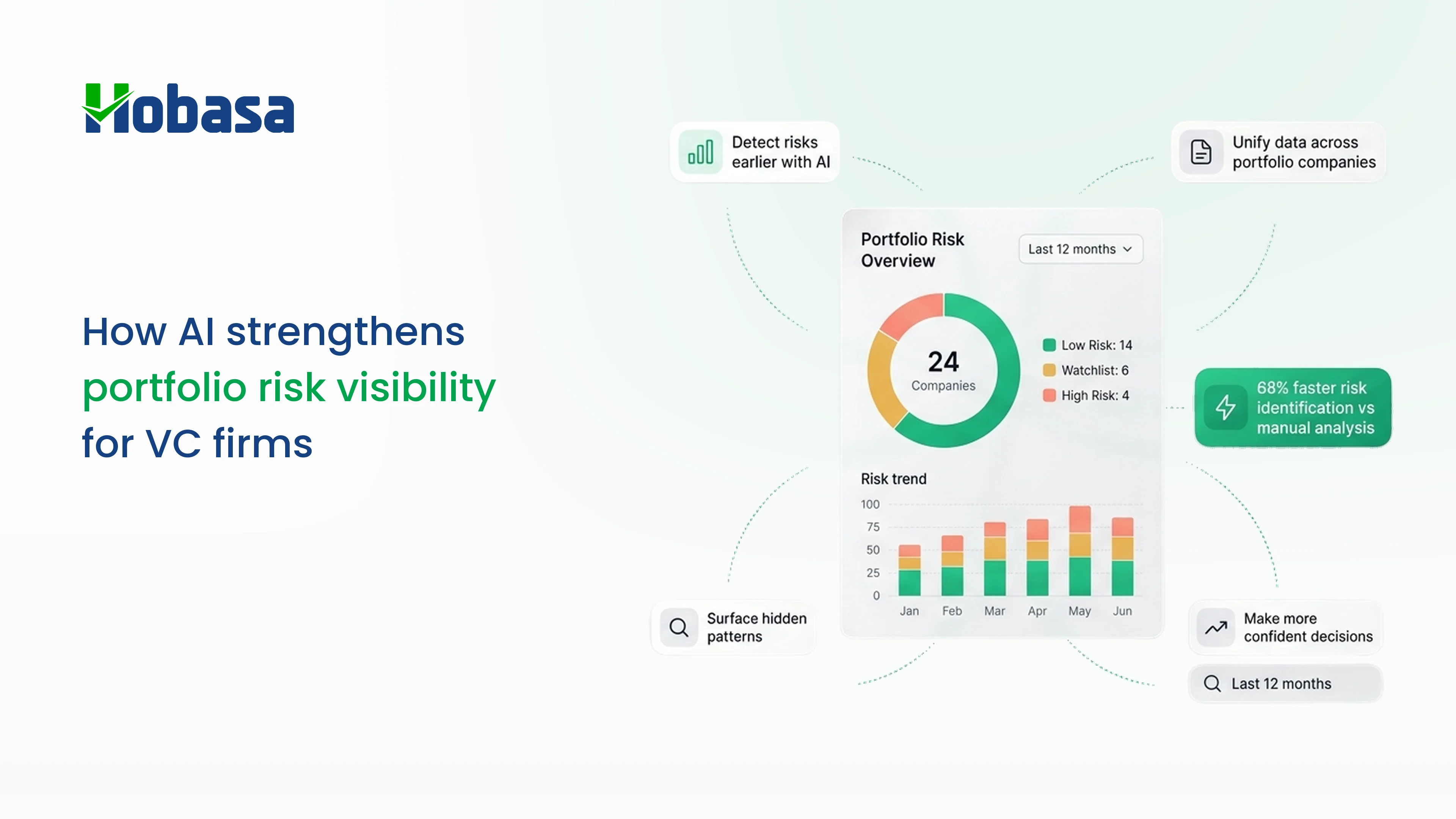
- AI helps VC firms gain deeper visibility by surfacing insights across portfolio companies in real time and highlighting the issues that really matter.
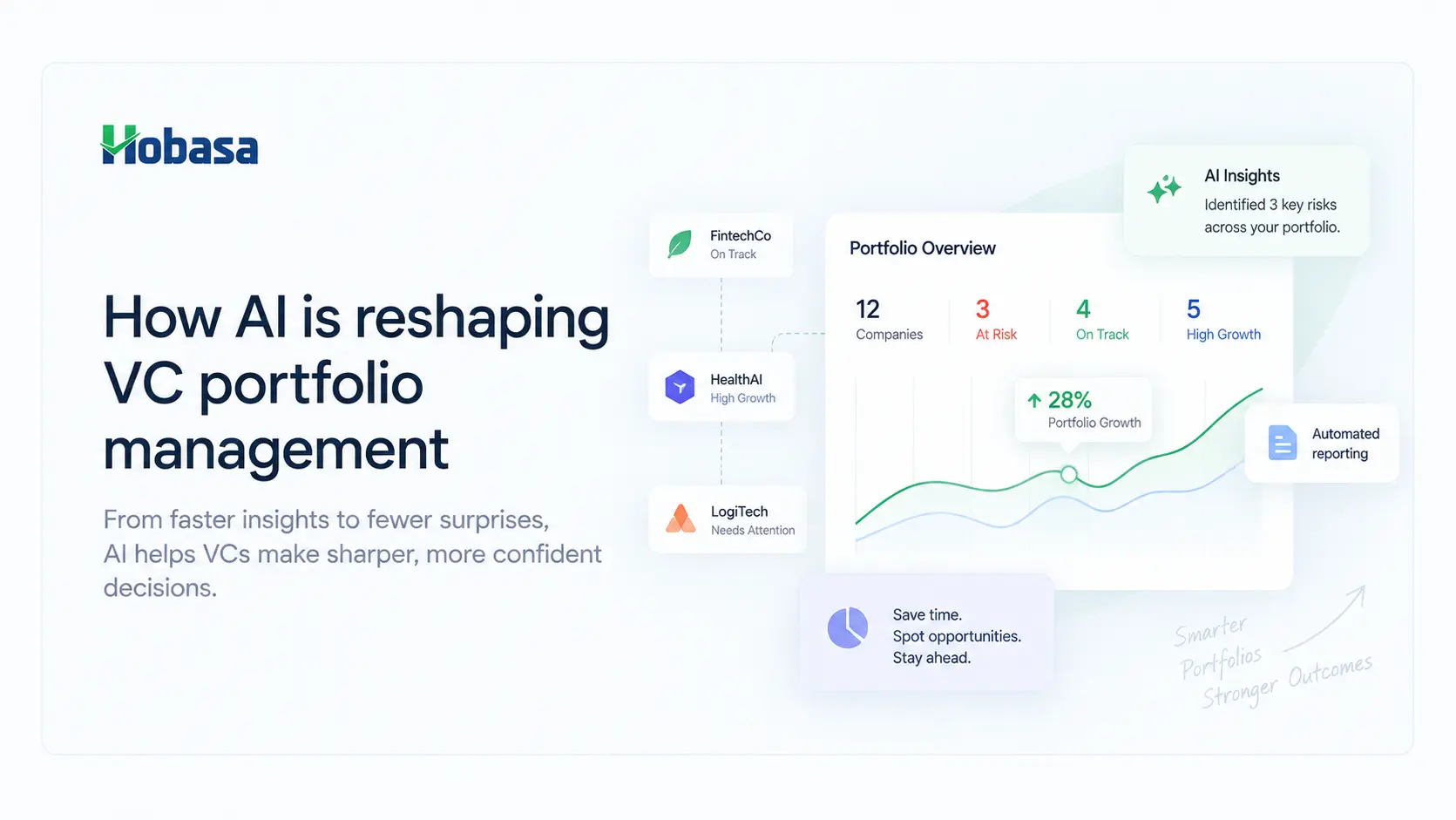
- AI-powered systems can identify emerging financial, workforce, or operational risks, improve performance forecasting, strengthen compliance oversight, and automate portfolio reporting.
- Better portfolio intelligence enables investors to have more informed conversations with founders, allocate capital more effectively, and make stronger investment decisions.
- AI complements - not replaces - founder relationships, investment expertise, and strategic judgment by providing actionable insights.
For venture capital firms, making an investment is only the beginning of the value creation journey.
The decisions that follow - whether to provide additional capital, help a founder navigate through operational challenges, or prepare for an exit - depend on one critical factor: having timely and reliable insights into portfolio performance.
As portfolios become larger and more complex, obtaining meaningful insights is becoming increasingly difficult. Data is spread across multiple business systems, reporting formats vary from one company to another, and important changes can be difficult to identify through periodic updates alone.
That's where AI steps in. AI can help you address these challenges by improving portfolio visibility, surfacing emerging risks, and providing deeper insights into company performance.
In this blog, we explore why portfolio management is becoming complex for venture capital firms, the limitations of traditional approaches, and how AI can help you strengthen portfolio visibility, identify risks earlier, and make more informed investment decisions.
Why portfolio management is becoming more complex for VC firms
Portfolio management has always been a core part of venture investing. However, several factors are making it increasingly challenging.
1. Growing portfolio complexity
Many venture firms today manage larger portfolios than they did a decade ago with companies spanning industries, geographies, business models, and growth stages. Each company may track performance differently. Some report detailed operational metrics, while others focus primarily on financial outcomes. This makes it difficult to create a consistent framework for evaluating portfolio health across multiple investments.
2. Greater pressure to support portfolio companies
The role of venture firms has evolved beyond capital allocation. Founders increasingly expect investors to provide strategic guidance, operational expertise, and support during periods of uncertainty. Delivering meaningful support requires a deeper understanding of what is happening inside portfolio companies.
3. Important business changes are not always visible immediately
Portfolio companies can experience significant changes between board meetings and investor updates. Customer churn may increase, hiring plans may accelerate, expenses may rise unexpectedly, or cash reserves may decline faster than anticipated. Because reporting is often periodic, venture firms may only become aware of these developments after they've started influencing growth, profitability, or future fundraising prospects.
4. Investors do not always have a complete view of portfolio companies
Unlike founders and management teams, investors are not involved in the day-to-day operations of portfolio companies. As portfolios grow, maintaining a consistent and detailed understanding across multiple companies becomes increasingly challenging, making it harder to identify emerging risks and opportunities early.
Portfolio complexity outgrowing monthly updates?
Hobasa helps VC firms gain clearer, earlier visibility across portfolio companies.
Talk to our teamThe limitations of traditional portfolio management approaches
Traditional portfolio management practices continue to provide significant value. However, they were developed in an environment where the volume, speed, and complexity of data were very different from what investors face today.
1. Historical reporting provides snapshots, not continuous visibility
Board meetings, quarterly reviews, and founder updates remain important sources of information. However, they typically provide a point-in-time view of company performance rather than an ongoing understanding of business conditions. This often creates gaps between what is happening inside a company and what investors are able to see.
2. High-level metrics do not always tell the full story
Revenue growth, customer acquisition, and cash runway are important indicators. However, they do not always reveal the underlying drivers of portfolio company performance. A company may continue to show strong growth while operational inefficiencies, customer concentration risks, workforce instability, or expense management issues begin developing beneath the surface.
3. Portfolio companies work with disconnected systems
Portfolio companies have data spread across disconnected systems such as accounting platforms, payroll systems, CRM platforms, and HR software. When data remains fragmented across different applications, connecting the dots becomes significantly harder - making it difficult for VC firms to gain a comprehensive view of portfolio health.
4. Manual analysis becomes difficult to scale
As portfolios grow, reviewing reports, comparing metrics, and identifying trends requires considerable time. Manual analysis quickly becomes a bottleneck for investment teams that need to make faster, better-informed decisions.
How AI can transform portfolio management for VC firms
Rather than replacing existing oversight processes, AI strengthens them by helping investors identify important signals, uncover trends, and make sense of growing volumes of information. This allows investment teams to spend less time gathering data and more time focusing on strategic decisions and founder support.
1. Improving performance visibility across portfolio companies
AI platforms help bring greater visibility to portfolio management by consolidating information from multiple sources and highlighting changes that may require your attention. Instead of relying solely on periodic updates, investors can gain a broader understanding of how portfolio companies are performing and where potential challenges may be emerging.
2. Detecting emerging risks earlier
AI helps you recognize concerning patterns earlier, allowing for more timely discussions with founders and better-informed decisions regarding portfolio support and capital allocation.
3. Providing deeper context behind company performance
AI can help you move beyond the numbers themselves and understand the factors influencing them. By connecting information across different areas of the business, you can gain a more complete picture of what is driving growth, slowing execution, or creating operational pressure. This additional context supports more meaningful conversations with portfolio company leadership teams.
4. Strengthening fraud detection across portfolio companies
Fraud can have significant financial and reputational consequences for you and your portfolio companies. AI-driven monitoring can identify suspicious activity early, helping prevent minor issues from developing into more serious problems.
5. Improving compliance oversight
AI-powered systems like Hobasa can identify potential compliance risks by flagging missing documentation, policy deviations, delayed filings, or inconsistencies in financial and operational records. This enables you to become aware of potential issues earlier and engage with portfolio companies before they escalate.
6. Supporting performance forecasting
Specialized AI-powered software can provide informed performance forecasts by analyzing historical trends alongside current business indicators. Changes in revenue growth, cash flow, customer acquisition, operating expenses, and hiring patterns can be evaluated together to identify where a company may be heading if current trends continue.
7. Automating portfolio reporting
AI consolidates business information, generates standardized reports, and highlights key performance trends automatically. This not only makes your job significantly easier but also helps you focus on the things that really matter.
8. Supporting more informed capital allocation decisions
By providing deeper visibility into portfolio companies and surfacing insights that may not be immediately apparent through traditional reporting, AI helps you evaluate opportunities more effectively and make better capital allocation decisions.
AI-ready portfolio oversight, grounded in real signals.
See how Hobasa supports better-informed investment decisions without waiting on stale packs.
Get in touchPutting it all together
As portfolios expand and business complexity grows, gaining a clear understanding of what is happening inside each portfolio company becomes increasingly difficult. Traditional oversight approaches remain valuable, but they can no longer be the only source of visibility for modern venture capital firms.
AI is helping investors bridge this gap - delivering deeper visibility, earlier risk detection, and more informed capital allocation decisions. When paired with founder relationships and strong investment expertise, AI becomes a powerful lever for portfolio value creation.
Platforms like Hobasa bring together financial, operational, and workforce data across portfolio companies and layer AI-powered insights on top - so your teams can spend less time chasing information and more time supporting founders and making better investment decisions.
See how Hobasa reshapes VC portfolio management.
Connect data across your portfolio and let AI surface the insights, risks, and forecasts that move investment decisions forward.
FAQs
AI is helping VC firms improve portfolio management by analyzing data across portfolio companies, identifying emerging risks, forecasting business performance, automating reporting, and providing deeper insights into company health. This enables investors to make more informed decisions and engage with founders proactively.
Modern VC portfolios span diverse industries, geographies, and growth stages, generating more data than ever before. Founders increasingly expect strategic support, and important business changes can happen between reporting cycles - making it harder for investors to maintain timely visibility across every company.
Traditional approaches rely on periodic reporting and high-level metrics, which provide only a point-in-time view of performance. When each portfolio company reports differently and business data resides across multiple systems, comparing performance consistently across the portfolio becomes challenging.
AI can consolidate and analyze data from multiple business systems, giving investors a more connected view of financial, operational, and workforce performance across their portfolio companies - surfacing risks, trends, and opportunities in real time.