- Venture firms face several risks across their company portfolio, including cash flow pressure, rising expenses, customer concentration, workforce instability, and compliance issues.
- These risks are difficult to detect early because investors typically rely on periodic reporting, board meetings, founder updates, and high-level metrics that do not always provide visibility into the real issues.
- Fragmented systems and manually prepared reports can make it harder to distinguish genuine risk signals from short-term fluctuations.
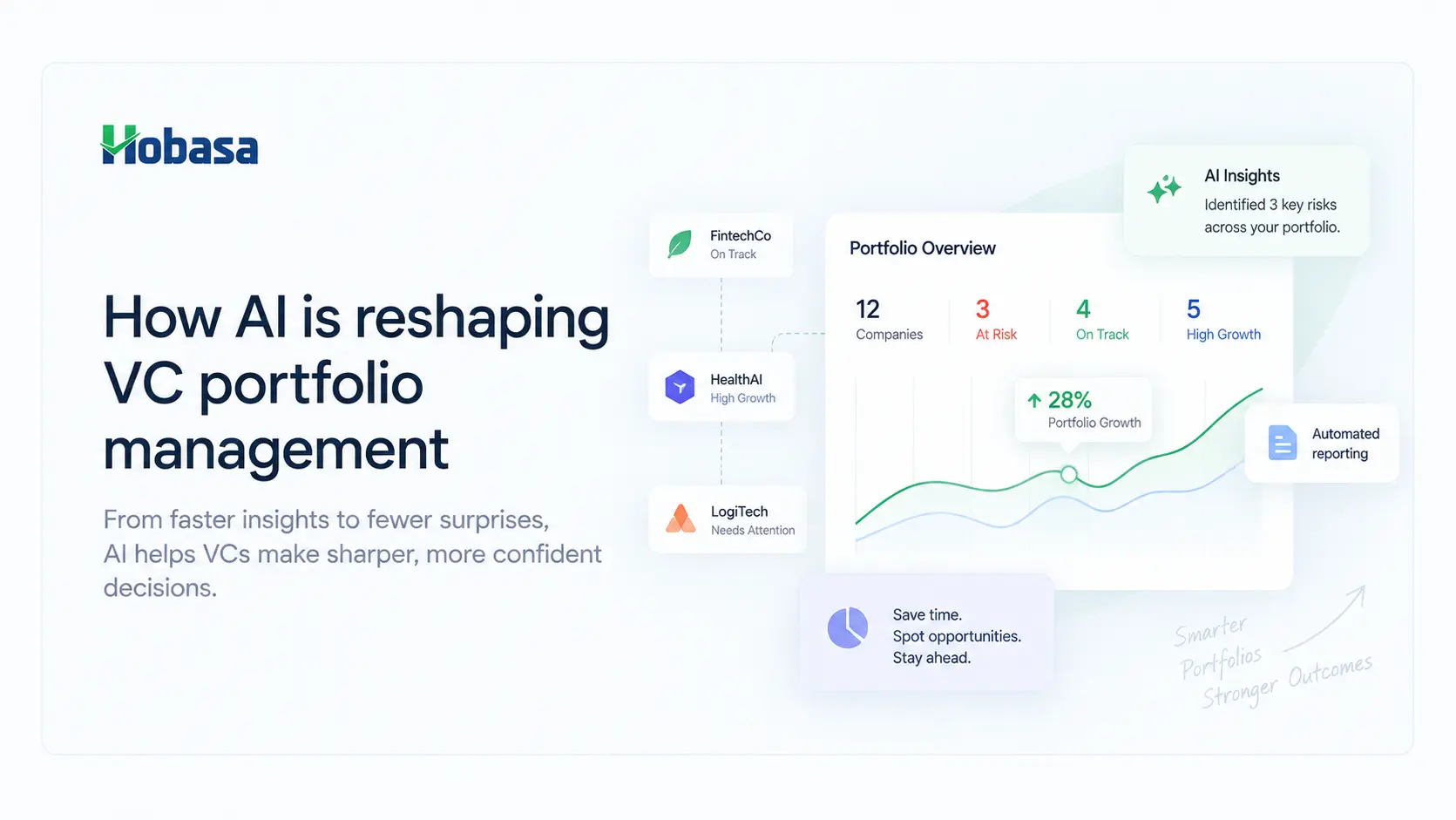
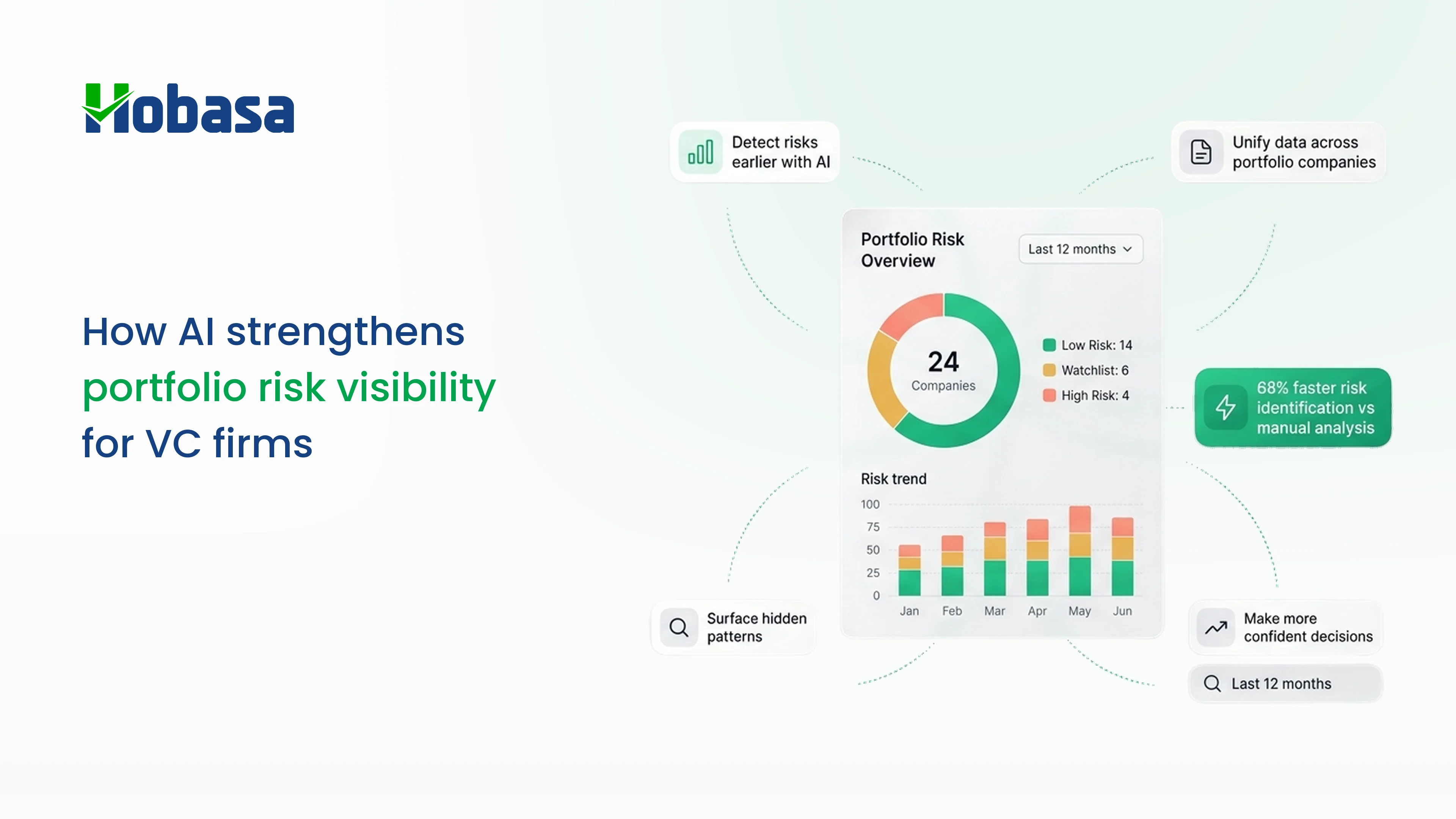
- AI helps VC firms strengthen portfolio visibility by identifying anomalies, uncovering root causes, generating real-time reports, and improving visibility across portfolio companies.
- With proactive insights into emerging risks, VC firms can make better-informed decisions.
As a venture capital firm, much of your understanding of portfolio performance comes through founder conversations, board meetings, and periodic updates. These interactions are essential, but they do not always capture everything happening beneath the surface.
A company can continue reporting strong growth while expenses quietly rise, cash reserves decline faster than expected, or operational issues begin affecting execution. By the time these problems become visible, they may have already influenced the company's performance.
This challenge becomes even greater as your portfolio expands. Monitoring multiple companies across different sectors, business models, and stages of growth makes it increasingly difficult to separate normal fluctuations from genuine risk signals.
This is where AI can help. By providing deeper visibility and helping uncover signals that might otherwise go unnoticed, AI enables you to make portfolio decisions with greater confidence and respond to potential risks before they escalate.
In this article, we look at the portfolio risks that often remain hidden, why they are difficult to monitor at an early stage, and how AI can help.
Portfolio risks that often go unnoticed
For VC firms, portfolio risks develop through a combination of financial, operational, and organizational changes. What initially appears to be a minor deviation can eventually influence growth trajectories, fundraising prospects, and ultimately portfolio value. The challenge lies in recognizing these risks early enough before they escalate.
1. Decreasing cash runway and rising burn rate
Changes in spending patterns, rising operating expenses, or slower-than-expected revenue growth can gradually alter a portfolio company's financial position. Sustained increases in burn rate or declining cash reserves can reduce financial flexibility and make it more difficult for portfolio companies to execute growth plans.
2. Execution risks and slowing operational momentum
Delays in product delivery, declining sales efficiency, slower customer acquisition, or missed milestones may indicate that a company is struggling to maintain momentum. Left unaddressed, these issues can affect scalability and weaken companies' ability to achieve expected growth outcomes.
3. Customer concentration risk
Overreliance on a small number of customers creates vulnerability. The loss of a major account can disrupt cash flow, increase uncertainty, and expose weaknesses in the company's revenue model. The impact may extend beyond revenue alone - influencing cash flow, growth forecasts, and overall business stability.
4. Talent and leadership-related risks
Frequent leadership changes, hiring delays, rising attrition, or skill shortages can create friction that affects product development, customer relationships, and operational stability. Because many venture-backed companies operate with lean teams, disruptions involving key talent can have a noticeable impact on performance.
5. Operational inefficiencies that affect scalability
As companies grow, complexity naturally increases. Rising expenses, inefficient processes, delayed collections, or fragmented systems can create operational hurdles. These inefficiencies may not immediately affect topline growth, but over time they can reduce margins, slow decision-making, and make scaling more difficult.
6. Interconnected risks across the business
Portfolio risks rarely exist in isolation. A hiring slowdown may affect product delivery. Rising expenses may coincide with slowing growth. Customer churn may contribute to cash flow pressure. Viewed individually, these signals may seem manageable. Viewed collectively, they often provide a clearer picture of underlying business health.
7. Delayed reporting and incomplete information
Most companies provide updates through monthly reports and board meetings. While these reporting processes are important, they may not always capture changes as they happen - leaving investors without a real-time view of emerging risks.
Portfolio risk still arriving too late?
Hobasa helps VC teams see financial, operational, and workforce risk signals earlier across the portfolio.
Talk to our teamWhat makes it hard for VC firms to detect portfolio risks in time
As portfolios grow, identifying risks early becomes increasingly challenging - especially because information arrives in pieces, across different systems, and at different points in time. Some common factors contribute to these blind spots:
1. Information arrives periodically, not continuously
Most portfolio reviews rely on monthly updates and scheduled board meetings. While these discussions are valuable, they naturally focus on historical performance. As a result, changes that occur between reporting cycles may remain unnoticed until they begin affecting growth, cash flow, or operational performance.
2. Portfolio companies work with disconnected systems
Finance, payroll, CRM, procurement, and operational data often reside in separate platforms. Since these systems do not always communicate with each other, gaining a complete picture of company health becomes difficult. Important context may remain hidden when company data is spread across multiple tools.
3. Risks rarely appear in isolation
Portfolio risks usually develop through a combination of factors rather than a single event. As a result, portfolio companies may appear healthy at a high level while underlying issues continue to build in the background.
How AI can help VC firms stay ahead of emerging risks
As portfolios grow, maintaining a clear understanding of what is happening inside each company becomes increasingly challenging. AI helps bridge this visibility gap by providing you with a more objective and continuous view of portfolio health.
1. Move beyond periodic updates
Instead of relying only on scheduled reports, AI continuously monitors financial, operational, and workforce indicators - surfacing meaningful changes as they emerge, not weeks after the fact.
2. Separate real risks from temporary fluctuations
Not every deviation signals a serious problem. AI analytics platforms like Hobasa can help you analyze financial trends of companies in your portfolio and compare current performance with historical behavior. Instead of reacting to every short-term change, your teams can focus on persistent patterns that deserve closer attention.
3. See the complete picture
Business risks don't develop in a single area. A company experiencing slower revenue growth may also be facing rising costs, declining productivity, or increasing employee turnover. AI connects signals across separate systems so the underlying problem becomes easier to understand.
4. Identify anomalies and unusual patterns
By surfacing anomalies, highlighting unusual patterns, and providing AI-driven insights, Hobasa helps you understand the true operating picture across portfolio companies and identify risks before they blow up into real problems.
5. Detect fraud risks and regulatory issues
Duplicate payments, unexplained expense spikes, unauthorized transactions, policy violations, and missing approvals are rarely highlighted in monthly investor updates. AI analytics platforms can help you monitor underlying business activities and flag anomalies that deserve closer examination - with always-on, real-time monitoring.
6. Simplify portfolio reporting and analysis
AI consolidates data across companies, generates standardized reports, and highlights the changes that matter most - reducing the time your teams spend on manual analysis and freeing them to focus on strategic conversations with founders.
AI that surfaces portfolio risk you can act on.
See how Hobasa strengthens visibility without waiting for the next board update cycle.
Get in touchHow Hobasa can help VC firms manage portfolio risks
As your portfolio grows, maintaining a clear and accurate understanding of what is happening inside every company becomes increasingly difficult. While founder updates and board meetings remain important, they do not always reveal the complete picture - and risks rarely announce themselves before they begin affecting performance.
When you can identify emerging issues earlier, understand the drivers behind performance changes, and separate temporary fluctuations from genuine risks, you are better positioned to protect portfolio value and make more informed decisions.
Platforms like Hobasa help you achieve this by connecting data across finance, HR, operations, and other business systems used by your portfolio companies. Instead of relying solely on manually prepared reports, you gain access to a centralized view of key metrics and AI-powered insights that help you understand not just what is changing, but also the why behind it.
Ultimately, portfolio risk management is not about increasing control over portfolio companies - it's about giving you the visibility to support founders earlier, more meaningfully, and with greater confidence.
Spot portfolio risks before they escalate.
Connect data across your portfolio companies and let Hobasa surface anomalies, emerging risks, and the signals that matter most - in real time.
FAQs
AI continuously analyzes financial, operational, and workforce data across portfolio companies to surface anomalies, uncover unusual patterns, and highlight the changes that matter - so investors can act before issues escalate.
Common portfolio risks include cash flow pressure and declining runway, rising operating expenses, execution and operational inefficiencies, customer concentration, compliance gaps, and workforce instability or employee attrition.
Portfolio visibility often depends on founder updates, board meetings, and reports that provide only a snapshot of company performance. When data is spread across multiple systems and functions, connecting the underlying signals becomes even more difficult - so important changes may remain unnoticed for longer than expected.
Hobasa connects data across finance, HR, operations, and other systems used by portfolio companies, and layers AI-powered analytics on top - helping investors detect anomalies proactively, identify risks before they escalate, improve visibility across the portfolio, and generate reports and insights in real time.