- Most organizations have access to extensive HR data, but still struggle to identify workforce risks early enough to influence outcomes.
- HR risks such as attrition, absenteeism, compliance gaps, burnout, performance inconsistency, and skills misalignment tend to build gradually rather than appear suddenly.
- Effective risk management depends on interpreting HR data in context and connecting it to business decisions.
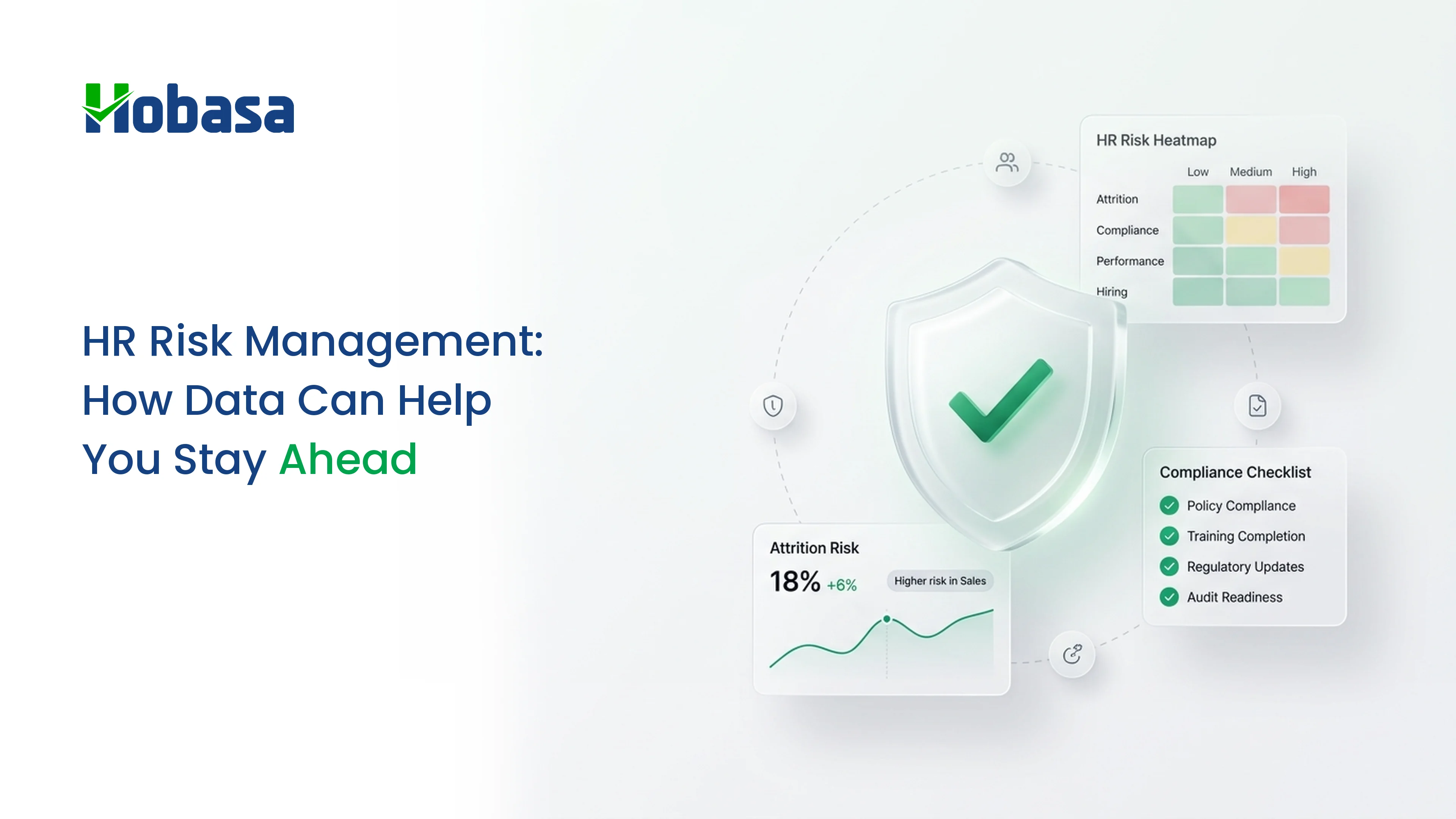
- HR data strengthens risk management by helping leaders spot early warning signals, strengthen compliance oversight, improve workforce planning, and manage attrition.
- When used well, HR data helps HR leaders identify constraints early, preserve flexibility, and prevent reactive decision-making.
- The real value of HR data lies in enabling better decisions before workforce risks begin to affect operations, finances, or organizational stability.
Most organizations today have access to a wealth of HR data.
Attrition trends, engagement scores, absenteeism, and compliance metrics are readily available across systems and dashboards. Yet despite this abundance of information, many organizations still struggle to anticipate HR risks early enough to influence outcomes.
The challenge isn't data availability - it's interpretation and timing.
HR risks rarely appear as urgent issues. They emerge gradually through subtle shifts in attendance patterns, capability strain, or documentation gaps. By the time these risks start impacting operations or finances, leaders often have fewer options and higher costs to manage.
This is why HR data has become central to effective risk management.
When used thoughtfully, it helps you see where constraints are forming, question assumptions before decisions are finalized, and bring HR risks into strategic conversations.
In this blog, we explore the different kinds of HR risks companies face and how data can help mitigate them.
Understanding the HR risks organizations commonly face
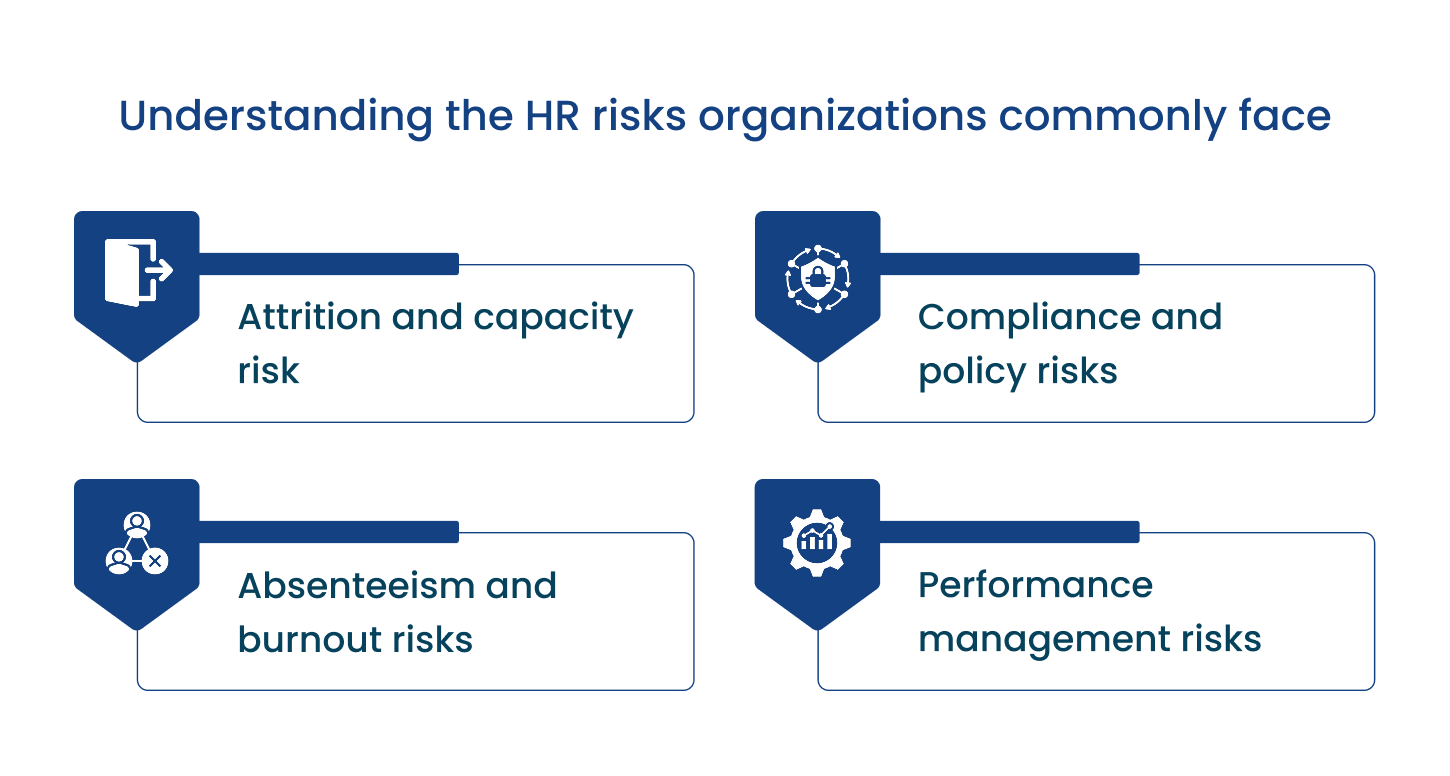
HR risks tend to build slowly - across hiring, workload distribution, and skill mismatches - until they begin to affect your operations.
What makes these risks particularly challenging is that they often don't look like "HR problems" at first. They show up as missed deadlines, slowed execution, declining engagement, or leadership strain and are often difficult to detect early without strong visibility into people-related trends and patterns.
Some of the most common HR risks organizations face today include:
1. Attrition and capacity risk
Employee attrition continues to be one of the most visible HR risks for organizations. High attrition can disrupt productivity, increase hiring costs, affect team morale, and create operational instability.
What makes this risk particularly challenging is that employees often show signs of disengagement long before they leave. Declining engagement, limited career mobility, workload imbalance, and manager-related concerns can all contribute to rising turnover over time.
Without strong visibility, these patterns often go unnoticed until attrition begins affecting business performance more significantly.
2. Compliance and policy risks
As organizations manage distributed teams, evolving labor regulations, employee documentation requirements, and workplace policies across multiple systems and locations, compliance management is becoming increasingly complex.
Missed certifications, inconsistent policy adherence, overtime violations, incomplete documentation, or gaps in employee record management can expose organizations to legal, financial, and reputational risk.
The challenge for HR leaders today is ensuring continuous visibility into compliance-related issues rather than relying solely on periodic audits or manual reviews.
3. Absenteeism and burnout risks
Rising absenteeism often signals deeper organizational challenges related to employee wellbeing, workload pressure, or workplace culture.
Excessive workloads, poor work-life balance, prolonged stress, and operational strain can gradually contribute to burnout, disengagement, and declining productivity across teams.
For HR leaders, the challenge is identifying these patterns early enough to intervene before they begin affecting morale, collaboration, productivity, or turnover more broadly.
4. Performance management risks
Inconsistent performance management can create broader organizational risks over time.
When performance expectations are unclear, feedback cycles are irregular, or manager effectiveness varies significantly across teams, organizations may experience productivity decline, disengagement, lower accountability, and retention challenges.
Performance-related risks can also affect succession planning and long-term workforce capability if high performers are not adequately supported or identified early.
For HR leaders, maintaining consistency and visibility across performance processes is becoming increasingly important as organizations scale and evolve.
HR risks building quietly across systems?
Hobasa connects workforce, payroll, and policy signals so risk surfaces before it becomes an incident.
Talk to our teamWhy risk management is becoming a priority for HR leaders
Risk management has become a central part of the HR leadership mandate because workforce risks now have a direct and immediate impact on business performance.
Attrition, absenteeism, skills gaps, and compliance issues no longer stay contained within HR - they affect financial stability and organizational credibility.
As organizations operate in more volatile and fast-changing environments, leadership teams increasingly expect HR to surface risks early, not after they escalate. This includes identifying where hiring is going wrong, where skill gaps are increasing, and where documentation gaps could lead to compliance issues.
When these risks are identified late, leaders are forced into reactive decisions with fewer options and higher cost.
For HR leaders, effective risk management is therefore not about maintaining controls or producing more reports. It is about preserving flexibility.
By using HR data to highlight emerging workforce pressures and challenge assumptions before decisions are finalized, you can act decisively and prevent operational disruptions.
Harnessing HR data to strengthen risk management
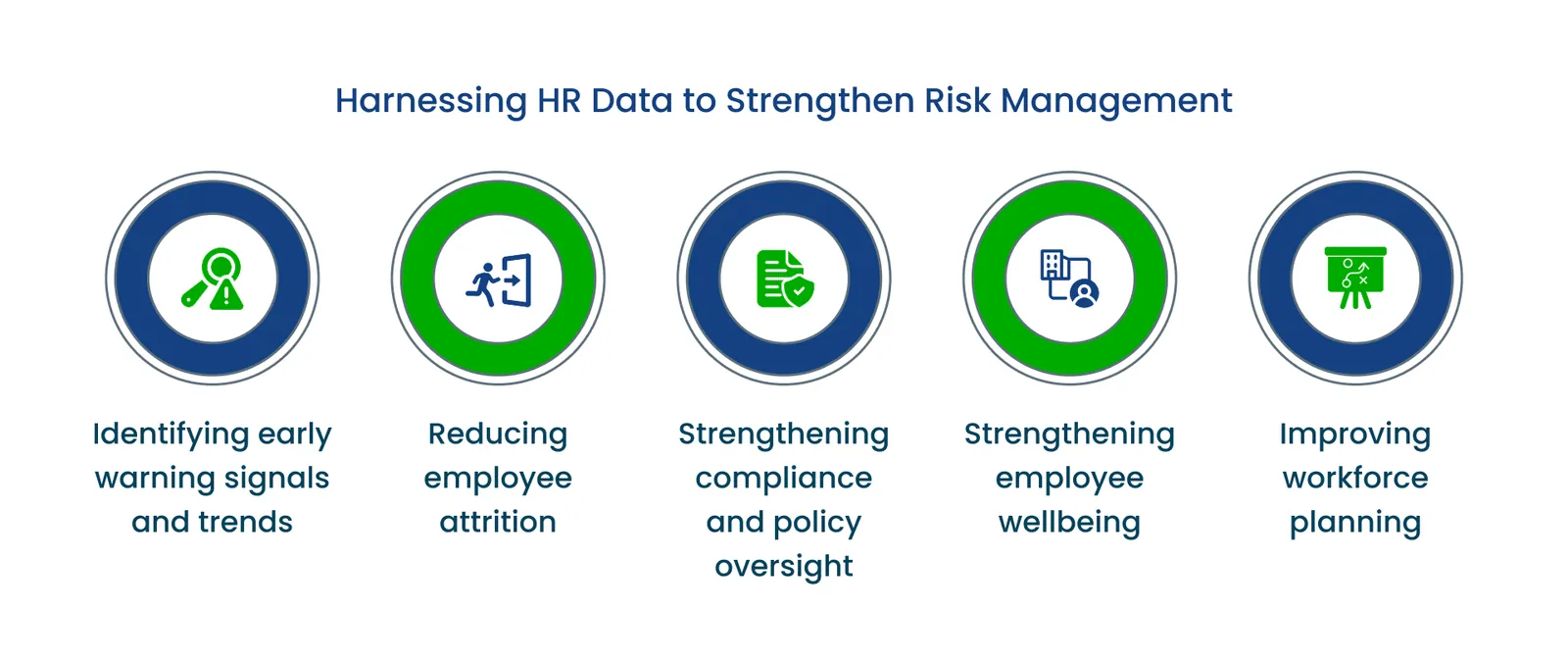
As organizational complexity grows, HR data is becoming one of the most valuable tools available to strengthen risk management.
The real value of HR data lies in its ability to help organizations move from reactive issue management to proactive risk prevention.
Here's how you can leverage HR data to strengthen risk management.
1. Identifying early warning signals and trends
Many HR-related risks emerge gradually through subtle signals spread across teams, systems, and departments. Such signals include rising absenteeism, declining engagement, increasing overtime, productivity fluctuations and much more.
Viewed independently, these trends may not appear alarming. However, when connected through HR data, they can reveal broader organizational risks much earlier.
For example, with a platform like Hobasa that integrates with your existing HR systems and provides centralized insights in real time, you can easily monitor overtime, engagement levels, turnover trends, and much more.
A steady increase in overtime combined with declining engagement scores in a specific department may indicate growing burnout risk or staffing imbalance that could eventually affect employee retention.
This kind of visibility allows you to intervene proactively rather than reacting only after issues become more severe.
2. Reducing employee attrition
Employee attrition affects productivity, hiring costs, team stability, and operational continuity. For HR leaders, the real challenge is to understand the conditions contributing causing employee exits.
HR data helps you connect trends across engagement, absenteeism, overtime, performance patterns, manager effectiveness, and internal mobility to identify areas where attrition pressure may be increasing.
For example, if a department consistently shows high overtime levels, declining engagement, and lower internal movement, you can investigate whether workload imbalance, limited growth opportunities, or leadership challenges are the causes.
This visibility allows you to take targeted action - such as improving workforce allocation, strengthening manager support, reviewing career progression, or addressing operational bottlenecks - before attrition begins affecting business performance.
3. Strengthening compliance and policy oversight
Compliance management has become increasingly complex as organizations manage distributed teams, changing labor regulations, employee documentation requirements, certifications, and workforce policies across multiple systems and locations.
Relying heavily on periodic audits or manual reviews often delays risk detection and limits visibility into emerging issues. That's precisely where HR data comes in.
HR data when analyzed continuously, in real-time helps you spot gaps in workforce policies, employee documentation, and internal processes.
For example, Hobasa works with the HR systems you work with, analyzes the data, and serves up meaningful insights – in one single space. Issues such as overtime, misrepresented certificates, or employee misclassification are flagged instantly, helping you take timely corrective action.
This helps reduce operational, financial, and reputational risks associated with compliance gaps.
4. Strengthening employee wellbeing
Workload pressure and employee burnout can directly affect productivity, engagement and retention.
HR data helps you identify where operational pressure may be affecting employee wellbeing and team performance by tracking trends across overtime levels, absenteeism, productivity metrics, and engagement scores.
If a specific function consistently records excessive overtime alongside rising absenteeism and declining engagement, it may indicate unequal workload distribution or resource constraints.
This visibility allows you to take corrective action - such as adjusting staffing levels, redistributing workloads, improving workforce planning, or supporting managers more effectively - before overwork begins affecting performance and retention at a larger scale.
By using HR data to improve workload visibility, you can build a more sustainable work environment while improving operational stability.
5. Improving workforce planning
Without clear visibility into workforce capacity, capability gaps, and future talent needs, organizations often struggle to plan proactively and respond quickly to changing business demands.
This is where HR data can significantly strengthen workforce planning.
By analyzing hiring trends, attrition patterns, workforce costs, and skills availability, you can make more informed planning decisions and identify potential gaps earlier.
For example, HR data may reveal that certain teams are consistently operating with high overtime levels or hiring timelines are slowing in specific functions.
These insights help you anticipate workforce pressures earlier and plan more effectively around hiring, reskilling, and resource allocation.
Instead of relying only on annual planning cycles or reactive hiring decisions, HR data enables more continuous and proactive workforce planning aligned with evolving business needs.
Turn HR data into early warning, not after-action review.
See how Hobasa helps CHROs stay ahead of compliance, attrition, and cost risk.
Get in touchPutting HR data to work
Attrition, compliance gaps, burnout, hiring inefficiencies, and workforce planning issues directly affect productivity, operational continuity, employee experience, and business execution.
This is why HR leaders are increasingly expected to bring stronger visibility and earlier insight into the people-related risks affecting the organization.
HR data plays a critical role in enabling that visibility.
When used effectively, it helps you identify workforce pressures earlier, improve planning decisions, strengthen compliance oversight, reduce attrition, and respond to operational challenges in a timely manner.
But the real value of HR data is not in tracking metrics alone. It is in helping you make better decisions before risks begin affecting operations and overall business performance.
For HR leaders, this creates an opportunity to contribute far beyond traditional HR operations. By harnessing HR data, you can reduce attrition, strengthen workforce planning, and most importantly, help your business navigate through uncertainties.
Strengthen HR risk management with Hobasa.
Hobasa connects with the HR systems you already use to surface early warning signals across attrition, compliance, absenteeism, and workforce planning - so you can act before risks affect your business.
FAQs
HR data helps identify early signs of workforce risk - such as rising absenteeism, declining engagement, or capability strain - before those issues escalate into operational or financial problems. It provides visibility that supports proactive decision-making rather than reactive responses.
HR data can surface risks related to attrition, absenteeism, burnout, skills gaps, performance inconsistency, leadership continuity, compliance exposure, and documentation gaps. These risks often appear as patterns across multiple data points rather than isolated events.
Many HR risks build slowly and don't look like urgent problems at first. They may show up as small shifts in attendance, workload, engagement, or compliance that are easy to overlook without connected, ongoing analysis.
Instead of reviewing data periodically or in isolation, HR leaders should use HR data continuously and bring it into decision moments - such as hiring plans, restructuring, growth initiatives, or policy changes - to challenge assumptions and highlight emerging constraints.