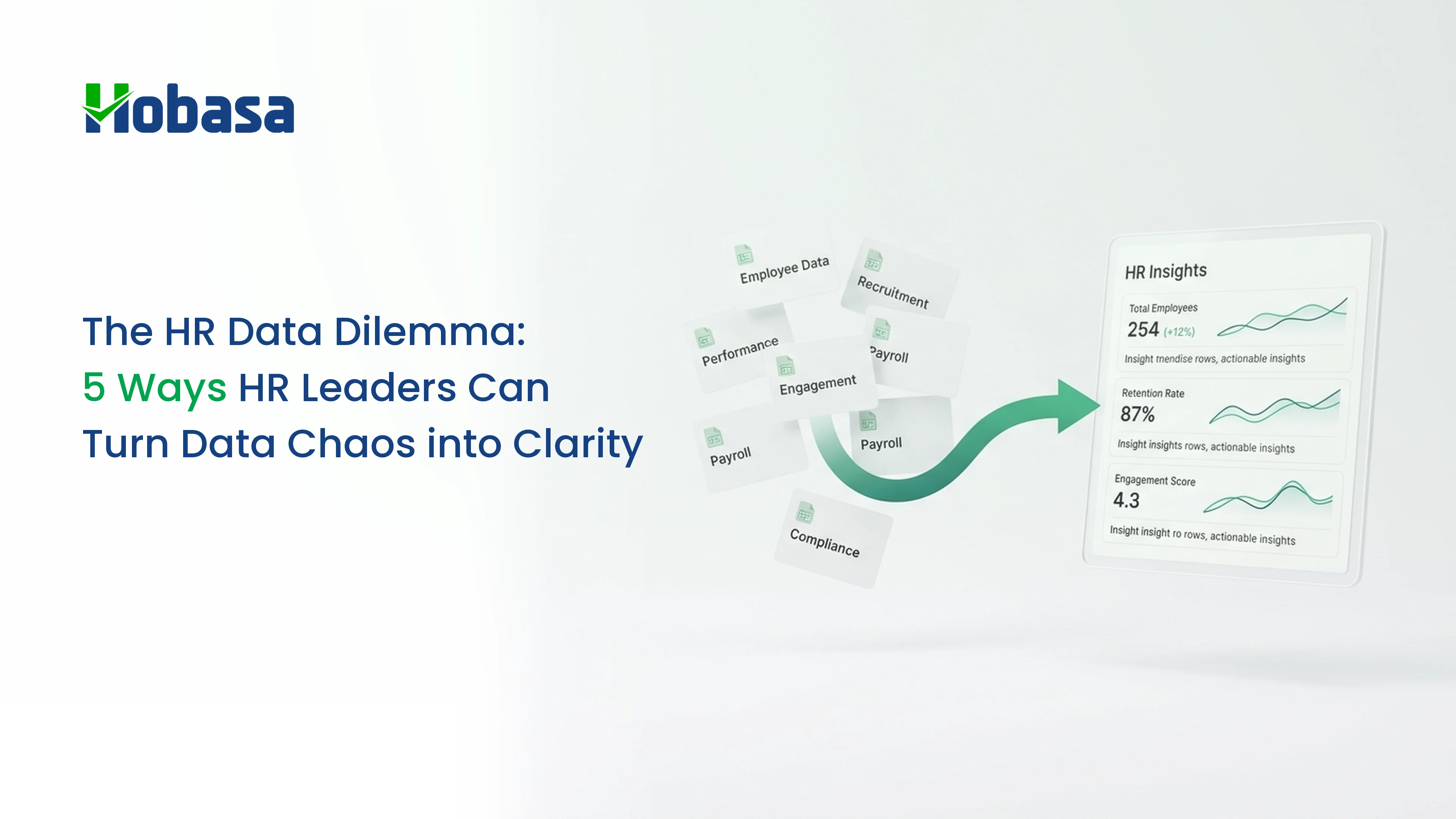
- HR data chaos is created by fragmented systems, metric overload, and an over-reliance on historical reporting.
- When data lacks clarity, workforce risks such as turnover, burnout, compliance gaps, and skill gaps surface too late.
- Data chaos slows decision-making, weakens workforce planning, and reduces confidence in HR insights at the leadership level.
- Cutting through data noise requires focusing on business-critical workforce signals and identifying leading indicators.
- AI can help reduce chaos by surfacing patterns and early signals, but human judgment remains essential for interpretation and action.
- HR leaders who translate data into clarity strengthen risk management and support better, more proactive decisions across the organization.
HR leaders today are surrounded by data.
Employee turnover patterns, engagement scores, absenteeism trends, and policy deviations are readily available across dashboards and reports. Yet despite this abundance, many organizations still struggle to use HR data in ways that genuinely inform decisions and reduce risk.
The issue isn't access to information - it's making sense of it at the right time.
Workforce risks tend to build gradually through subtle changes in attendance, workload distribution, or engagement patterns. When these signals are buried under layers of metrics and disconnected systems, clarity arrives late - often after options have narrowed and corrective action becomes more costly.
For HR leaders, this creates a real dilemma. HR data has enormous potential to strengthen risk management, but only if it is interpreted right. Without that, more data can actually increase confusion.
This blog explores the HR data conundrum - what causes data noise, how it limits effective risk management, and the practical ways HR leaders can turn workforce data into clarity that supports better, proactive decisions across the organization.
What causes HR data chaos?
HR data noise occurs when organizations generate large volumes of workforce information without sufficient clarity, alignment, or context to make that information truly actionable.
The issue is rarely a lack of data. In most organizations, HR teams already have access to more workforce metrics than ever before. The challenge is that the information is often fragmented, inconsistent, overly detailed, or disconnected from business priorities.
Several factors contribute to this problem.
1. Fragmented HR systems
One of the biggest contributors to HR data noise is disconnected systems.
HR data often sits across multiple platforms - HRIS systems, payroll software, applicant tracking systems, engagement tools, performance management platforms, and learning systems that do not always integrate effectively.
As a result, HR teams spend significant time reconciling information, validating reports, and piecing together trends manually. This data fragmentation limits visibility and makes it difficult to develop a unified understanding.
2. Inconsistency in HR data across departments
HR data often lacks standardization across departments, locations, or systems. Different teams may define metrics differently, update information inconsistently, or rely on separate reporting methods. This creates confusion around workforce trends and reduces confidence in the data being used for decision-making. Even small inconsistencies can make it harder to identify meaningful organizational patterns early.
3. Metric overload
One major contributor is metric overload. HR teams track dozens - sometimes hundreds - of indicators across hiring, engagement, performance, learning, and compliance. Without clear prioritization, these metrics compete for attention and dilute focus.
HR data everywhere, clarity nowhere?
Hobasa helps HR leaders cut through fragmented systems and get decision-ready workforce insight.
Talk to our teamHow data chaos impacts HR leaders – and the organization as a whole
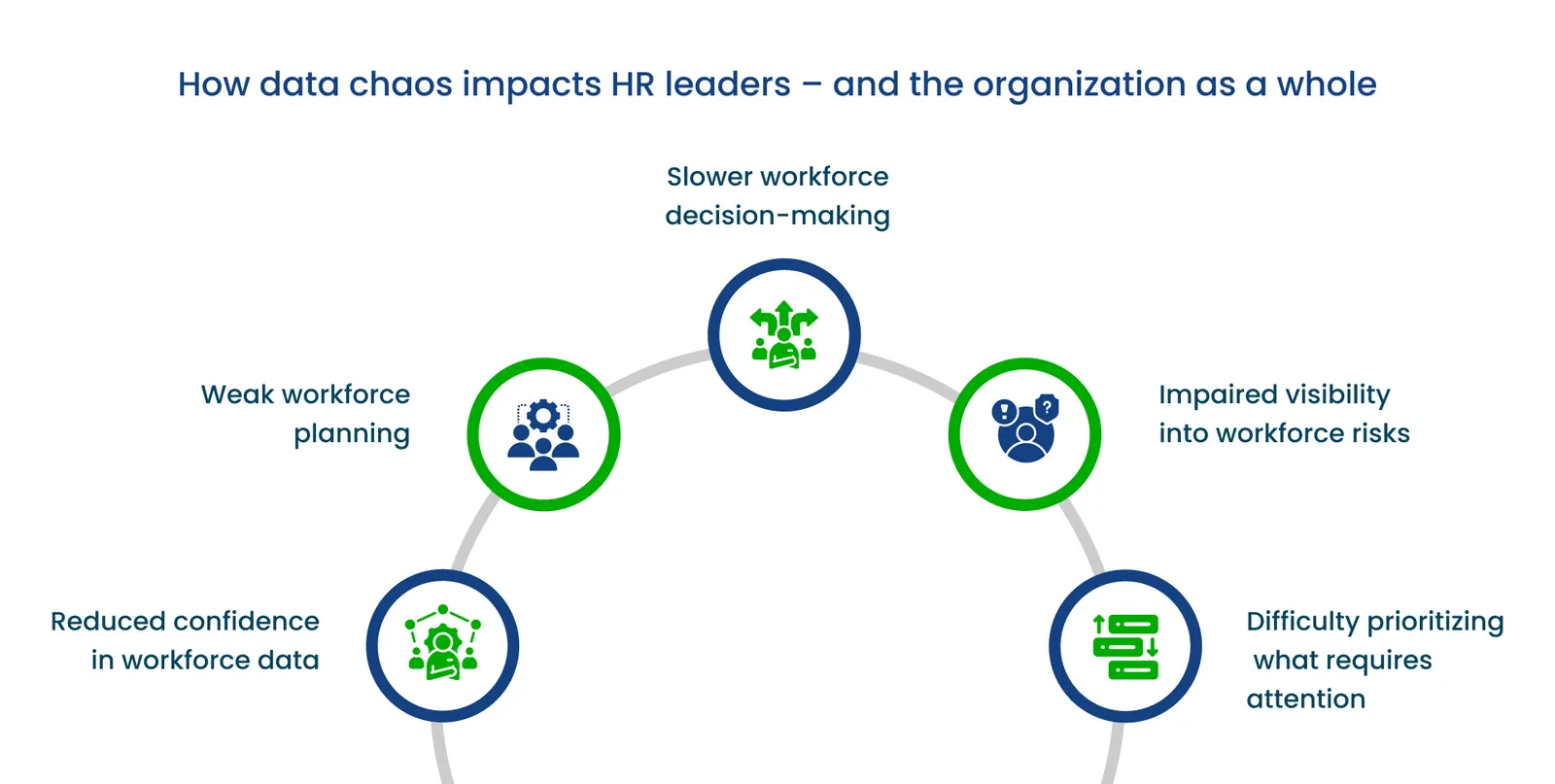
HR data noise creates challenges that extend far beyond reporting inefficiencies. When workforce visibility is limited, organizations become more reactive in how they manage workforce planning, retention, productivity, compliance, and operational stability.
The impact is felt both at the HR leadership level and across the broader business.
1. Slower workforce decision-making
When HR data is fragmented and difficult to interpret, decision-making naturally slows down. Validating data, reconciling reports, or trying to determine which trends actually matter takes up more time than required. This delays responses to emerging workforce issues and limits organizational agility. In fast-moving business environments, delayed workforce decisions often create larger operational consequences later.
2. Impaired visibility into workforce risks
Data noise makes it harder to identify workforce risks at an early stage. For example, rising attrition trends, declining engagement levels, absenteeism patterns, or hiring bottlenecks may not become fully visible until they begin affecting team stability or operational performance. Without clear visibility into these trends, leaders are often forced into reactive responses instead of proactive workforce planning.
3. Difficulty prioritizing what requires attention
One of the biggest consequences of excessive reporting is reduced clarity around priorities. When HR leaders are reviewing too many disconnected metrics simultaneously, it becomes an ordeal to distinguish between temporary, not-so-important fluctuations and patterns that require immediate intervention. This can result in leadership attention being spread too thinly across low-impact issues while more important workforce gaps remain unaddressed.
4. Weak workforce planning
Poor workforce visibility affects planning quality across the organization.
Without clear insight into hiring trends, skills gaps, or productivity patterns, organizations struggle to align workforce planning with business priorities.
This often leads to reactive hiring decisions, staffing imbalances, succession planning gaps, and increased pressure on teams.
5. Reduced confidence in workforce data
HR leaders need to see the big organizational picture through reports. However, when workforce data is inconsistent or fragmented, confidence in reporting naturally declines.
Leadership teams may question the accuracy of workforce metrics or struggle to connect metrics across systems together to get a broader, organizational-level view of trends, risks, or constraints - even when individual data points are accurate.
This reduces HR's ability to influence strategic discussions effectively because workforce insights become harder to rely on.
How HR Leaders can cut through the data chaos and gain meaningful insights
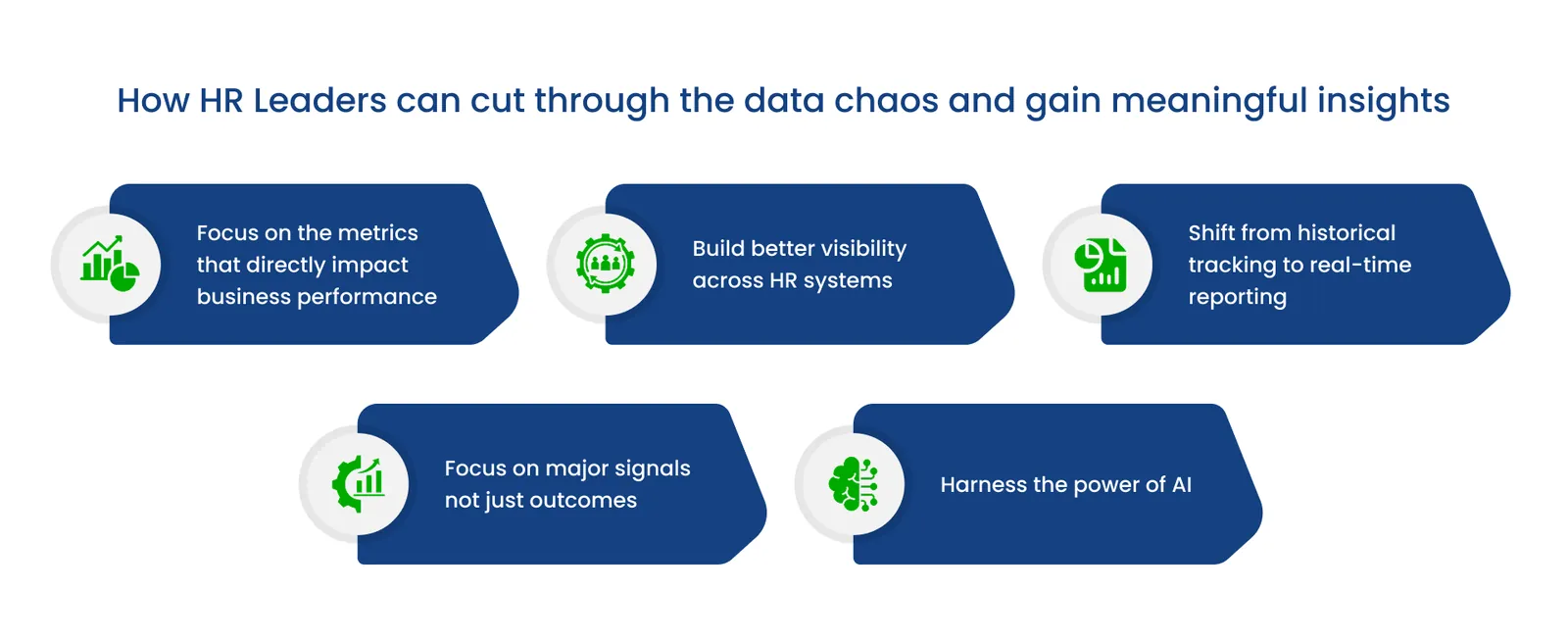
Turning HR data into clarity requires a shift in how HR data is framed, interpreted, and brought into decision-making. Here are practical ways you can do it right.
1. Focus on the metrics that directly impact business performance
Not every workforce metric deserves equal attention.
One of the most effective ways to reduce HR data noise is to focus on the metrics most closely tied to organizational performance and workforce stability. This includes metrics such as turnover trends, absenteeism rates, hiring efficiency, non-compliance indicators, etc.
With Hobasa, the process gets a lot easier. It connects with your current HR systems, processes all the data there is, and presents you with the most important workforce metrics in a centralized dashboard - so you get to track the KPIs that can significantly impact your business.
Prioritizing business-critical workforce signals helps you focus discussions around areas that influence operational continuity, productivity, and long-term organizational performance.
2. Build better visibility across HR systems
HR data noise often stems from fragmentation.
Integrating workforce data across HRIS platforms, payroll systems, recruitment tools, performance systems, and engagement platforms enables you to identify broader workforce patterns more quickly.
With a connected workforce view, you can detect trends earlier, improve workforce planning, and spot potential risks before they escalate.
Unified workforce visibility also reduces the time spent reconciling data manually and increases confidence in workforce insights.
3. Shift from historical tracking to real-time reporting
Traditional HR reporting often focuses heavily on what has already happened.
Modern workforce management increasingly requires proactive visibility into what may be developing across the organization.
Instead of relying solely on static reports, you can focus more on real-time reports that show emerging patterns such as hiring slowdowns in specific departments, increasing absenteeism trends, or constant policy deviations.
Real-time reports help you act earlier and make workforce decisions before challenges or risks intensify.
4. Focus on major signals not just outcomes
Many workforce risks surface long before they appear in performance reviews or turnover numbers. Declining internal mobility, engagement drops, workload imbalances, or persistent overtime frequently precede larger issues.
On their own, these signals may seem manageable. Viewed together, they frequently point to emerging risks that deserve attention.
By tracking these early indicators, you can address root causes directly rather than manage consequences. This approach helps prevent issues from turning into broader organizational disruptions.
5. Harness the power of AI
As workforce data volumes continue to grow, identifying meaningful trends across multiple systems becomes increasingly difficult.
AI can reduce this complexity by analyzing large datasets, identifying patterns, and surfacing workforce signals that may otherwise remain difficult to detect through traditional reporting methods alone.
This ensures you always have always-on, real-time visibility into HR process gaps as well as workforce patterns that may require your immediate attention.
Importantly, AI does not replace HR judgment or decision-making. Its value lies in helping you and your team process information faster, reduce reporting noise, and focus attention on the things that matter the most.
From data chaos to a shared workforce picture.
See how Hobasa aligns HR, payroll, and finance views for leaders who need answers, not another export.
Get in touchTurn HR data noise into decision-ready clarity with Hobasa
HR data becomes most valuable when it helps you see risk forming at an early stage. In environments where workforce challenges keep getting complex, Hobasa equips you with the clarity needed to cut through the data noise and connect signals across hiring, engagement, absenteeism, and compliance.
Hobasa works with your existing HR systems and provides you with a single source of truth comprising clear, actionable insights. With conversational AI, you can ask questions, investigate the root causes behind workforce issues, and generate reports instantly - without spending hours gathering and analyzing data manually.
Organizations that manage workforce risks effectively are often those that can turn data into timely action. By helping you cut through HR data noise and surface risks in real time, Hobasa enables more proactive decision-making.
Turn HR data noise into decision-ready clarity with Hobasa.
Hobasa works alongside your existing HR systems to connect signals across hiring, engagement, absenteeism, and compliance - so you can surface workforce risks early and act with confidence.
FAQs
HR data noise refers to large volumes of workforce data that lack clarity or context. It occurs when metrics are fragmented across systems, inconsistently defined, or disconnected from business decisions, making it difficult to identify what truly matters.
More data alone does not improve decisions. Without focus and interpretation, data can overwhelm leaders and delay action. Clarity comes from identifying the right signals and understanding their implications, not from tracking every available metric.
The most common causes include fragmented HR systems, metric overload, and heavy reliance on historical reporting.
HR leaders should bring data into decision moments, focus on business-critical signals, look for patterns across metrics, and interpret data in context rather than relying solely on dashboards or periodic reports.
AI helps process large datasets, identify patterns, and surface early signals that may be difficult to detect manually. Its role is to reduce complexity and highlight areas of attention - not to replace HR judgment or decision-making.